A Land Far Away
DataArt’s Indian office hadn't opened yet when I first applied to DataArt. The backstory is that one of my friends, whom I worked with a long time ago, was now working in DataArt Latvia. We were discussing how he was doing there, catching up. I said, hey, can you refer me? He said sure! Things quickly fell into place. There were vacancies, DataArt was recruiting in Riga, and I got selected.
Honestly, I'm not that good at geography, and I hadn't even heard the name “Latvia” before. But that was one of my reasons for wanting to go there: to try something new and fresh. Why not!
My wife was excited initially. We hadn’t been to Europe. I had been to the USA a couple of times, and my wife had only been to South Africa, so Europe was entirely new for us. We had a very positive feeling. We knew it was cold, but it was only theoretically cold to us. We hadn't experienced the cold yet ourselves. I said, “Let's keep an open mind. Let's see how it goes.”
Cultural Adaptation
A good thing about Latvia, and Europe in general, is the public transport. There’s no dependency on a car there, unlike the US, or Canada, where you need to learn to drive to get around. From day one you can just buy a bus ticket and go to the office.
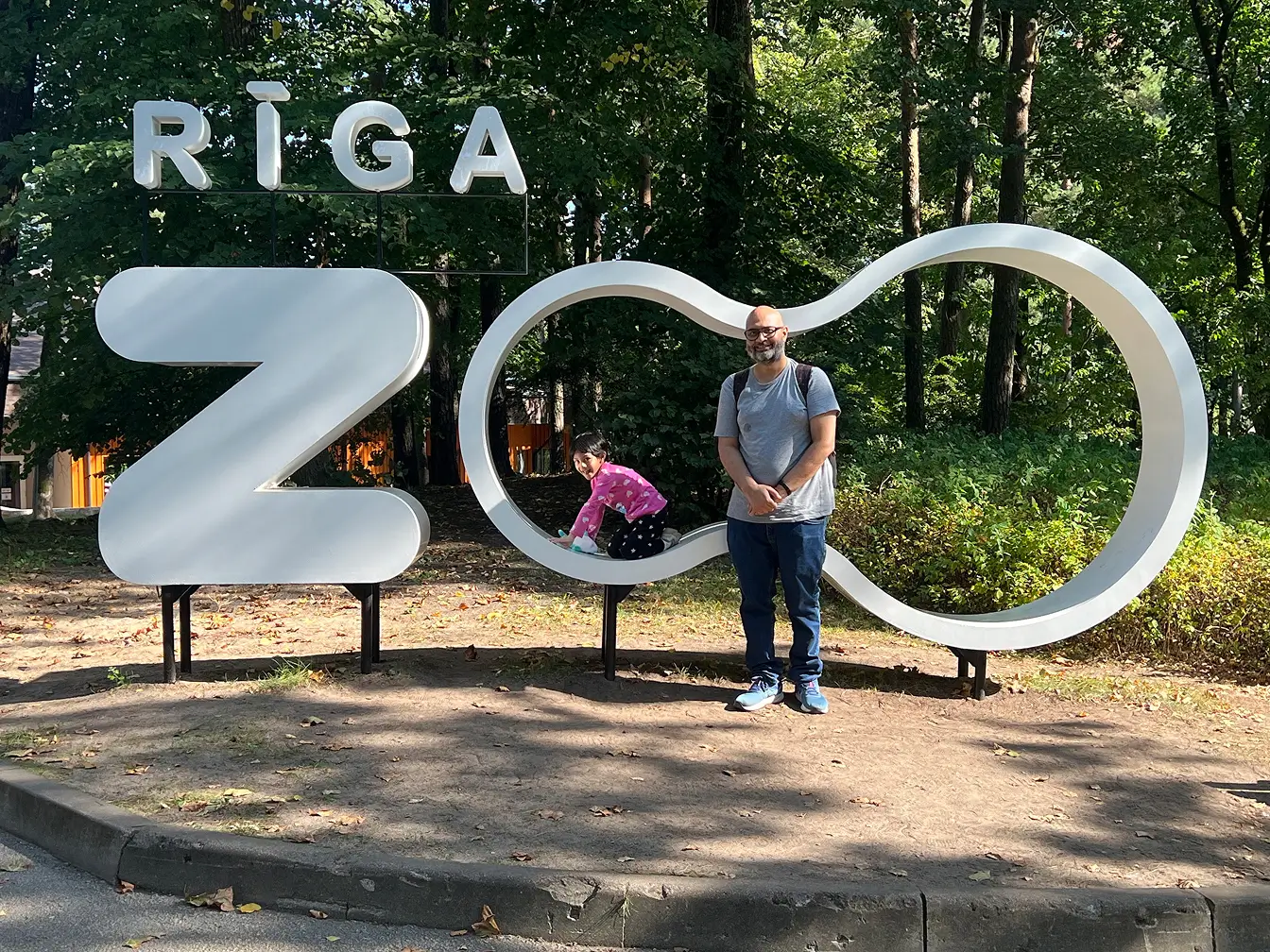
I didn’t drive in Riga. The main reason is that they drive on the opposite side of the road than we do in India. And you need some skills to drive on snow, right? I didn’t have those skills at that point.
My wife and daughter came to join me in Riga in July of 2024. It was the height of summer. They were enthralled. The weather was very nice. Sunlight till 10 p.m. It got bright early in the morning. Beautiful greenery everywhere. Did you know that 10 kilometers from the Riga city center, there is literally a huge forest? From a nature perspective, Latvia is one of the only few countries in the world where the territory occupied by forests is growing. There is a concentrated effort at reforestation in Latvia.
Back home
Come the end of September, the temperature started falling. My wife got a sinus problem, and went to the doctor. He said her health would depend on how her body reacts to the weather, and we couldn’t predict that. Once the temperature dropped some more, she said, “I'm giving up. I can’t handle this cold.”
I said, “What? This isn’t even cold. We need to take a decision right now, because otherwise things will get even colder in October and November.”
So in one week, we decided my wife and daughter would go back to Mumbai. I followed them 20 days later.
Luckily, my current delivery manager was really okay with that. When I was in Riga, our project client was sitting in Mumbai. It was very ironic: I’m a Mumbai person sitting in Riga, the client is sitting in Mumbai, and the team is across the globe.
So, my return to India had no impact on the project as such. From a work perspective, it was seamless. My laptop remained the same. Nothing changed. I’m just back in Mumbai now.
Cultural lessons
What I’ve seen personally in the Indian community, at least in the expat community, is that for women who are used to staying within their joint family, it’s a huge culture shock in a new country to be with only your partner. Once you lose that emotional connection to your extended family, that makes it very difficult to adjust to the new way of life. So especially from an Indian perspective, couples who are used to staying with their joint family need to consider this fact when starting work in a new country.
For employees, it’s important to keep an open mind. Especially for Indian colleagues. I would say we are typically used to working with other Indian colleagues, rather than such a diverse group like DataArt has. I’ve been working with colleagues from half a dozen different countries. So, I would say keep an open mind and be respectful towards each other.
I remember, I had colleagues in Argentina. They were so curious about me. They hadn’t worked with an Indian colleague before. They were shocked to find out that India has different languages, and we cannot all speak with each other, even being from the same country. The Argentinians were like, “How can you be from the same country, yet you can’t speak with each other?” It was a shocking concept for them.
DataArt culture is way different than “heritage” IT companies from India. DataArt is more energetic, more agile. And absolutely less bureaucratic. Embrace DataArt’s global, diverse culture!