
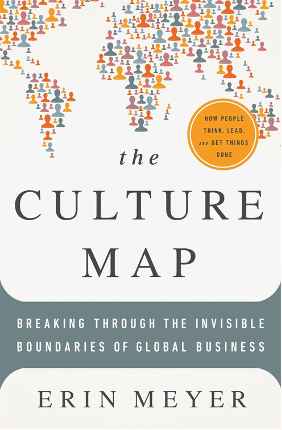
In this week's episode of our Soft Skills book series, Yuriy Yurchenko, leader of the Global People Development team, recommends "The Culture Map" by Professor Erin Meyer. This insightful book dives into how cultural differences shape communication styles.
Yuriy also includes practical exercises to help build cohesive international teams.
"The Culture Map" by Erin Meyer
DataArt is a company with offices in over 20 countries. We boast multinational teams and a culturally diverse client base. This diversity needs skills that facilitate effective communication among individuals from various backgrounds with distinct behavioral norms, traditions, and beliefs. “The Culture Map” provides the tools to navigate these complexities.
The book's core idea could be summarized as: 'I'm OK, and you're OK.'
Yes, we've grown up in different environments with different habits and preferences, and there are deep-seated reasons for this—natural, historical, and geographical. The book delves into these differences and their origins.
Why do Americans tend to be very direct in their communication, except when giving negative feedback? How do the Dutch, who communicate in a blunt yet open manner, manage to maintain close friendships? And how did hierarchical Japanese society evolve into one of the world's most consensus-driven cultures?
The book answers such questions clearly and explains how to foster productive communication within cross-cultural teams.
Our Team Story
Operating in a multicultural environment poses intricate communication challenges for a world-class engineering company. Our teams handle projects for clients across different countries and continents, often without prior experience in communicating with clients who adhere to specific cultural traditions.
To streamline team formation, we've developed a concise Soft Skills Quick Start training program based on the book, which includes a cross-cultural communication component the book.
This training is offered optionally to new teams to mitigate communication risks during project execution. A typical team response after completing the training: "The program helped us better understand each other, avoid unnecessary concerns, and consequently boosted our happiness and satisfaction with the project."
Exercise: Establishing Communication Guidelines
A beneficial practice for enhancing communication within a small multicultural team is establishing universal communication guidelines. These guidelines should be discussed with the team, clearly articulated, and documented.
For instance, we agree that our approach to providing feedback will be:
- Informative, backed by facts
- Event-focused rather than person-centric
- Delivered in the presence of team members
Exercise Steps:
- Identify priority communication guidelines and document them.
- Discuss your proposals with the team.
- Record outcomes in an accessible location.
- Adopt and encourage the use of guidelines.
- Integrate the process of acquainting the team with communication guidelines into your standard onboarding procedure.