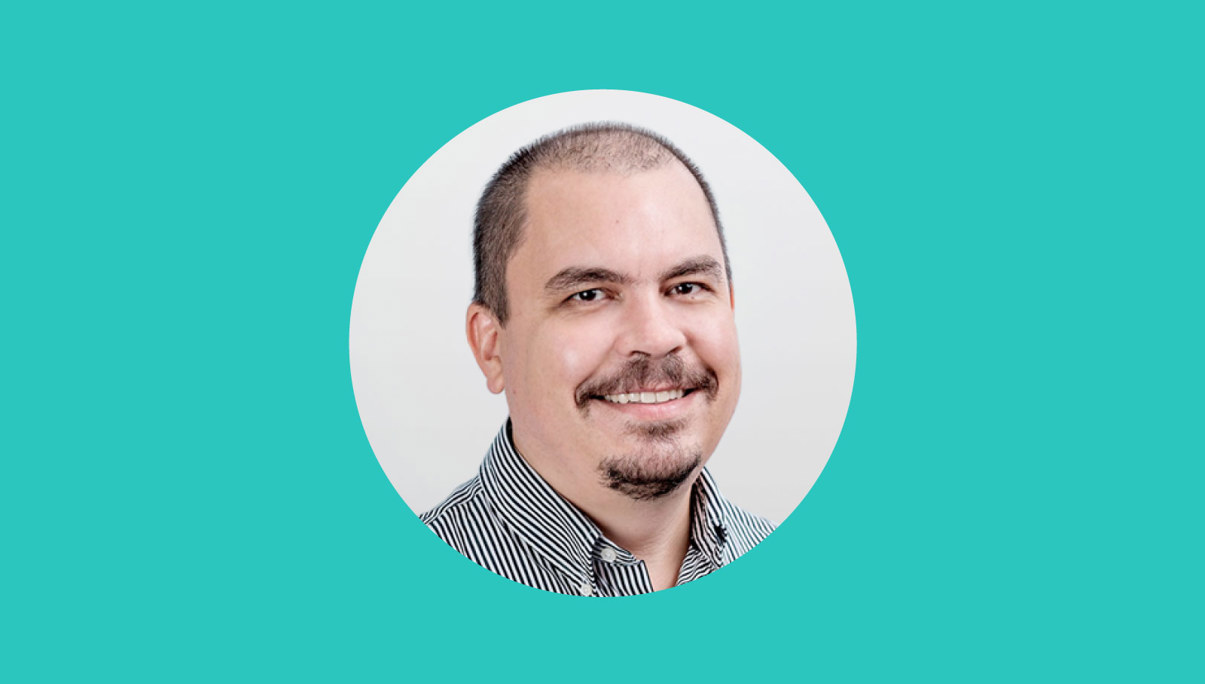
Q. How would you describe the way the company went through so many years?
A. DataArt was born to let us work together with no regret about the time spent working. We have survived, we have grown dramatically, and we have retained many colleagues for decades. You can call it a success without a secret ingredient. I believe the critical factor is our ability to minimize the concentration of toxic ingredients: self-praise, internal rivalry and power games, manipulations and micro-management.
Q. Did you, other managers and DataArt have to change a lot?
A. Sure, we call it adaptation. The world has constantly been changing, and we had to follow. Sometimes it was pleasant, like with technologies and methodologies which have made significant progress. We have always been stuck to the positive-sum game, which can be only derived from technology development. Sometimes changes are enforced and gloomy, like the last events when Russia decided to change geography despite it could only end in a negative-sum game.
Also, groups changed much more than individuals, and we see how our collective style of governance is essential for adaptation.
Q. Does the distance between top managers and engineers grow proportionately to the growth of the company?
A. Yes and no. The distance grows but not proportionally. Most of our top managers and key partners are pretty available. Everyone can appoint a meeting or send an email to any top. It will be appreciated and constructively accepted. Distance to the power is still extremely low in DataArt. However, we understand that it’s possible even in our flat structure because most colleagues keep the distance. It’s culturally supported in the vast majority of our labour markets. For me, the key problem is the ageing of the leadership. We are losing shared cultural references and existential anchors with younger generations of colleagues. The key events which defined DataArt in the past, like the USSR breakdown, the crash of the dotcoms bubble at the beginning of the century, and even the awful 2008 with the war in Georgia and a massive financial crisis – all the far past for many new colleagues. I remember when 23 years ago, we discussed if we had needed a bit of grey hair in our leadership. Now we have too much, and the grey hair are we.
Q. Which part of our corporate culture do you find the most crucial for our success?
A. The longer I observe DataArt’s development, the more simple and generic things I see as vital. Trust, respect, professional approach, and risk tolerance are balanced by scepticism and adaptation.
Q. How does this culture start?
A. Typically, organizational culture is 50% influenced by the leaders. The rest is a mixture of geographical, industrial, and media contexts at inception. Our President, Eugene Goland had several quite rough principles which defined DataArt:
- “People join the company. We all benefit from it.”
- “Usually, I feel bad. Doing business helps.”
- Eugene was always able to give trust immediately, in advance, and accept all the pain when the trust was broken.
The context at the inception moment was highly mixed. The world was full of opportunities, technologies, and international businesses have been prospering. The business environment in the post-USSR was ugly, but all was cheap. Arbitrage opportunities laid everywhere, but IT gave a chance to mix it with creation.
I also need to mention that one event explains a lot about DataArt. Eugene was behind two projects: Mail.Ru and DataArt. The teams were mixed. When the ways of these businesses separated, the ambitious and competing part of people followed Mail.Ru, and the rest were service people, adepts of the global professional markets’ opportunities.
The other significant sources were the Stockholm School of Economy and their favourite authors and business books: Itzhak Adizes (many titles); “Funky Business”, “Living Company”, etc.
Q. Was it brought in by a consultant agency?
A. No, it wasn’t.
Q. When a company states some values, could it stay away from the principle «we’re for all good and against all bad things»?
A. Thank you very much for the question. All the companies are for all good things. The values define priorities. How to check if the company follows the values declared? Compare with anti-values, check the priorities.
What DataArt’s “people first” means? Just that we think about people before many other important things: money, quality, competition, etc. All must be taken into account. The question is only “when” and “how”. Can you imagine a modern company with a value “people are not important”? But you easily can find an attractive company with “quality first” value which strives to minimize dependencies on professionals’ individual styles.
For DataArt, “people first” doesn’t mean that only people are important, but we prefer to see all the rest from the peoples’ perspectives. For example, I like how our colleagues from New York, Peter Vaihansky and Oleg Komissarov, explain their enterprise accounts acquisition and development strategy. The strategy is based on a portfolio of capabilities, including enterprise architecting and cloud migration. They target a category of people, “enterprise innovators”. Such people help enterprises to transform themselves. It’s a complex and painful exercise. We support “enterprise innovators”, providing them professional leverage and sharing their pain. Yes, these people can leave the company when their mission is accomplished, and we can be pushed out of these enterprises as a vendor. But these innovators take new missions in new companies, and they will bring us with them. The more innovators trust us, the more enterprise business we have. If we stay with clients, we will have more money. If we pushed out – we have more professionals available for winning new opportunities and have less non-innovative business. Both options are good. People go first, brands second.
The same is true about our other values. Trust goes before status and reputation. Flexibility precedes maturity and standards. Expertise drives us more than leadership or goals.
We are for all good things, but some good things work better for us.
Q. We know there is no company without its people. What kind of people are attracted by our company? And are there any people that wouldn’t match even if they are brilliant specialists?
A. All professionals are welcome. We intend to find an opportunity to work together with all who want to work with us. We are not 100% successful in it, but we try and grow. We require only responsibility, just to avoid micromanagement. And we don’t accept aggression and don’t like aggressiveness. Now is the worst time for speculations about aggression and aggressiveness, but on the governing core level, we are who we are, trying to retreat and mitigate.
Q. Does this picture start to vanish when a group of co-workers turns from tens to thousands?
A. Yes and no. It works in cycles. During periods of extensive growth, we employ everybody we can work with. When we face a storm, partners stay, many “passengers” leave, and the principles reinforce.
Q. What do you think is most important in our company?
A. Nothing. And everything. Do you know that the UK, the first constitutional monarchy in the world, doesn’t have a document called “the constitution”? The UK aggregates many documents and principles for guidance and legislation. Do you know that the Commonwealth, populated by 2.6 billion people, is guided by even more generic principles and optional constitutional links to the shared past? DataArt was intentionally created to let professionals work together conveniently. It means working with people who share the same values and principles. Yes, DataArt is a private company, but a “constitutional” private company, a commonwealth of free professionals who consciously accept the principles of cooperation which differentiate DataArt.
DataArt is just one attractive company among many others, but we care about our individuality because the market needs different players, professionals need various opportunities, and it gives a very important freedom – the freedom of choice.
Q. Has it always been like that, or could such priorities change? Both for the company and for you?
A. Yes, it has always worked this way. Eugene has never strived for more power, the key followers as well. After that, we collectively limit each individual power and influence, sacrificing the effectiveness of administrative control or the potential of visionary decision making.
Q. What allowed us to overcome so many crises, and how did they strengthen us?
A. I believe you already know the answer from the previous ones. DataArt went thru so many crises because the people went thru them. In 2001 we refined our values. In 2004, we understood the importance of reserves and diversification. In 2008 we established a mature business administration system. In 2014 we lost illusions that the history is ended. Now we are learning how to fight an uphill battle in the anti-globalization trend against unavoidable (the pandemic) and intentional (the war) evils. But each crisis strengthens our culture, and I believe it will work this way unless we make a fatal mistake. Human nature doesn’t fundamentally change, and attractive cultures will still be attractive in the future. However, nobody is prepared for everything, and nothing lasts forever. That’s why values are more important than an organization. And that’s why an organization can survive and develop by following its values.
Q. The company expanded a lot in Central Europe, especially recently, we opened two new offices in Poland – Kraków and Łódź, one in Belgrade, Serbia and one in Varna, Bulgaria. How would you describe that process, and where do you predict our focus will be directed in the future?
A. On the one hand, we follow our colleagues and try to organize at least some support in the places of our colleagues’ concentration. On the other hand, we invest in developing relatively new (Latin America) and completely new (Eastern and South Asia) markets, even thinking about Africa in the future. So, there is no planning but rather filtering. “People first” works here too. We invest only when we see proper people behind a location.
Q. Where do you think DataArt will be after its 30th anniversary?
A. I hope in our hearts, in our minds, in hopes of our clients. I used to define DataArt as a territory, but now I dream about just a self-organizing mind space.