



Being on idle means a developer is temporarily without a client project while remaining employed. This period is often used for upskilling, internal initiatives, and preparing for upcoming assignments.
You are opening our English language website. You can keep reading or switch to other languages.
13.05.20263 min read
Gustavo Meller: “My Life on Idle Was Like a Tarantino Movie”
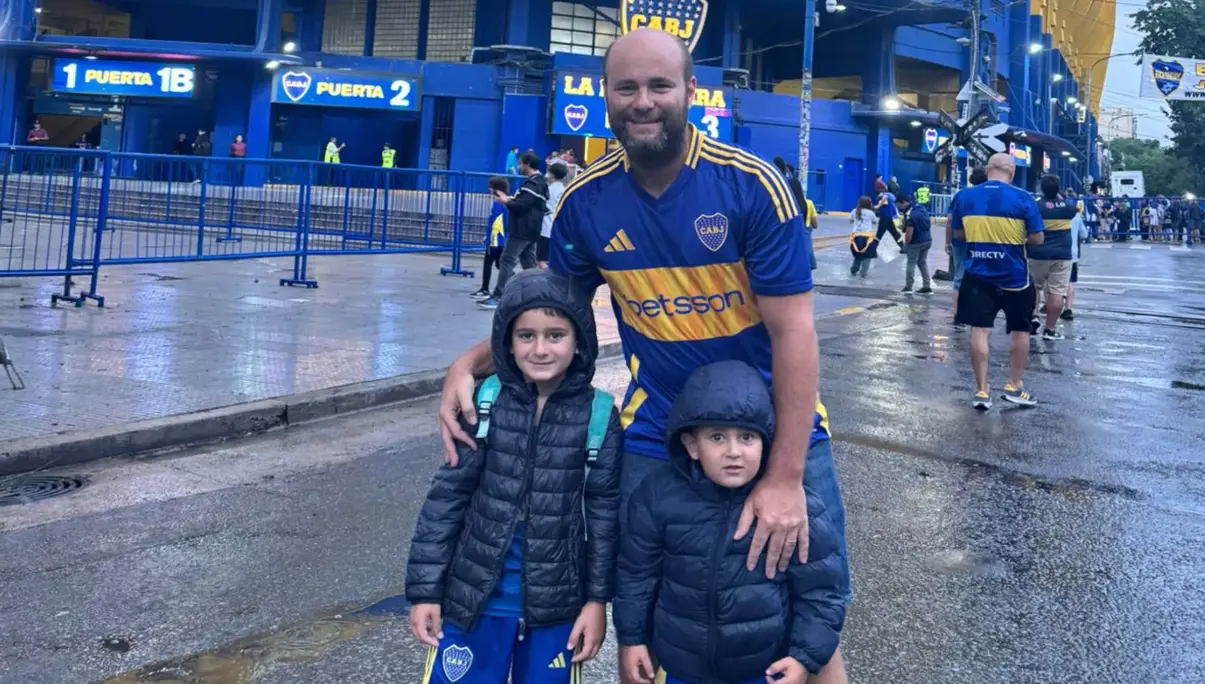
Gustavo Meller, Senior Developer, was one of DataArt’s first ever Argentinean colleagues. After nine years, Gustavo hit a patch of idle that lasted more than 10 months. By completing the highest number of internal courses ever recorded by any DataArt colleague (748.8 hours!), he turned a difficult career phase into a thrilling result.
Audio Version0:00
4:11
I’m going to hit 10 years in DataArt this May. I was one of the original colleagues in Argentina, even before we had an office in Buenos Aires. We were just 20 people at the time.
During all these years in DataArt I had been in idle three times, but each time was only for one or two months. Last year was totally different. It was like a Tarantino movie for me, with some action, some comedy, and mostly drama. Twice I was going to be released from the company, and was saved by a last-minute opportunity.
I started working at DataArt with SharePoint. After my first project ended, I moved to Sitecore and continued working with it across several clients. In mid-2024, the client decided to switch to a different technology, so I went on the bench at the beginning of 2025.
Senior AI Solutions Architect with LLM and RAG, Knowledge Graph Platform
Almaty, Astana, Belgrade, Cluj-Napoca, Dnipro, Kharkiv, Krakow, Kyiv, Larnaca, Lodz, Lublin, Lviv, Odesa, Remote.BG, Remote.GE, Remote.KZ, Remote.PL, Riga, Sofia, Tbilisi, Varna, Warsaw, Wroclaw, Yerevan
Senior Data Engineer with Google Cloud Spanner and Graph, Graph Platform
Almaty, Astana, Belgrade, Cluj-Napoca, Dnipro, Kharkiv, Krakow, Kyiv, Larnaca, Lodz, Lublin, Lviv, Odesa, Remote.BG, Remote.GE, Remote.KZ, Remote.PL, Riga, Sofia, Tbilisi, Varna, Warsaw, Wroclaw, Yerevan
First, I just tried to keep a positive attitude, and learn what I had missed in the previous years. I tried as hard as I could to get a project. I talked with different people in the company to see if they had any opportunities. I talked with my contacts first, then went outside my contact list. I talked with DMs and PMs. It was a difficult year for business. I had some chances, but for whatever reason, these projects never materialized. Once I was assigned to a project, but it didn’t go well—it was canceled before I could even start.
So I kept learning. I got proficient in the latest .Net technologies. To master these new technologies, I took full advantage of DataArt’s extensive learning ecosystem. The company offers a robust range of internal courses designed by experts, which provided me with a structured path to learn Angular, React, and MongoDB.
These courses made a significant difference in my career, giving me the foundational knowledge I needed to evolve as an engineer. However, following the philosophy that you can't truly know how to drive until you sit behind the wheel, I took my learning a step further. I supplemented my formal training by using AI tools to generate real-world coding exercises and complex scenarios. By prompting AI to challenge me with specific implementation problems, I was able to practice and refine my skills in a hands-on, iterative way, effectively translating theoretical concepts into practical, production-ready experience.
After that first project was canceled in May, there was nothing available until the end of September. I had already received a notice that my contract would be ending. Then, just four or five days before my contract expired, an opportunity appeared. It took two months for the client to get started. They kept postponing the start. Then, finally, in November I had the last interview, and the client said no. My heart was totally broken. After two months of waiting, they didn’t take me.
Another opportunity popped up the same day! I did another interview. I remember it was a long weekend, and on Monday I was told everything was going to be OK, but on Tuesday the client cancelled the position.
The clock was ticking. A last opportunity appeared for me on November 27, two days before my contract expired. And this is the client that hired me. Now I work with Angular, for a client based in New York. My hard work studying while on idle paid off. I’m really happy about having a project and working with colleagues from different parts of the world.
Last year at certain points my life felt like a nightmare. There was a lot of pressure. My wife and I were thinking what to do if I didn’t have a job anymore. It was crazy. But I love this company, and the people here made all the difference. In the end, it wasn’t just my own hard work and perseverance that saved me. It was all the other people in the company that saved me. Everybody helped me and worked with me to find me a project. That’s why I’m still here.
Subscribe to our IT Pro Digest
From AI and business analysis to programming tutorials and soft skills, we have it all!
You may also find this interesting
What does “being on idle” or “on the bench” mean in an IT company?
How long can a developer realistically stay on the bench?
What should developers focus on during long idle periods?
Can internal training programs really impact career progression?
Which technologies are most valuable to learn while on the bench?
How can AI tools support learning during idle time?
What are common mistakes developers make when they’re idle?
How important is networking inside the company during bench time?
How do developers stay motivated during uncertain or stressful idle periods?
Can idle periods ultimately strengthen a developer’s career?


