




AI is shifting the BA role from writing requirements to validating AI-generated outputs. BAs now focus on checking accuracy, context alignment, risks, and business value as AI produces more drafts.
You are opening our English language website. You can keep reading or switch to other languages.

08.05.20264 min read
The Future BA Is an AI Validator
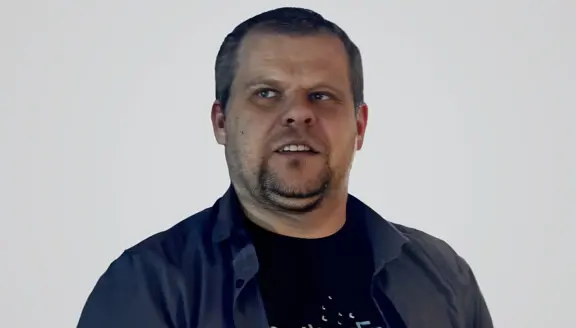
How has AI changed business analysis? Maksim Kazadoi, our Business Analyst, says that the BA’s role is shifting from producing requirements to validating AI-generated outputs, ensuring content is accurate, safe, and aligned with business needs and values. Here are nine takeaways with examples that show how this looks in practice.
Senior AI Solutions Architect with LLM and RAG, Knowledge Graph Platform
Almaty, Astana, Belgrade, Cluj-Napoca, Dnipro, Kharkiv, Krakow, Kyiv, Larnaca, Lodz, Lublin, Lviv, Odesa, Remote.BG, Remote.GE, Remote.KZ, Remote.PL, Riga, Sofia, Tbilisi, Varna, Warsaw, Wroclaw, Yerevan
Senior Data Engineer with Google Cloud Spanner and Graph, Graph Platform
Almaty, Astana, Belgrade, Cluj-Napoca, Dnipro, Kharkiv, Krakow, Kyiv, Larnaca, Lodz, Lublin, Lviv, Odesa, Remote.BG, Remote.GE, Remote.KZ, Remote.PL, Riga, Sofia, Tbilisi, Varna, Warsaw, Wroclaw, Yerevan
1. AI Can Help, But It Doesn't Know Your Business
AI identifies patterns, not context. It doesn't understand your company's unique situation. For example, it might not know that:
- Your organization calls customers "members".
- Deal approvals go through the legal department.
- Your legacy system behaves unpredictably on Tuesdays.
AI might give you a decent answer, but it won't fit your environment.
Example
You ask AI to generate acceptance criteria for a "Password reset via mobile app” scenario.
It returns: "The user receives a password reset code via SMS."
However, your company’s security policy prohibits SMS and requires email. Only a business analyst would catch this because they know the organization.
2. Good Requirements Depend on Good Prompts
Prompts are like requirements for AI. Vague prompts lead to unclear results.
Example
Prompt: "Write user stories for a shopping cart."
Result: Generic user stories that could fit Amazon, Zalando, H&M, or even a startup in a neighbor's garage.
A stronger prompt would be:
"Generate 5 user stories for a shopping cart in a B2B procurement portal where users can only order items approved for their department and require manager approval above €500."
Now the output is much more specific and relevant.
BA takeaway: Writing prompts is an extension of requirements engineering.
3. AI Hallucinates
AI fills gaps by predicting likely answers, leading to plausible but incorrect outputs.
Example
You ask AI:
"List all existing integration points between ERP and CRM".
It confidently replies with something like:
"Real-time loyalty synchronization service".
But your CRM doesn't even have a loyalty module. The AI isn't being deceptive; it's just matching patterns without real understanding.
BA takeaway: Confidence in tone is not a guarantee of accuracy. If AI sounds too confident, verify the result.
4. Always Cross-Check Against Real Sources
AI can generate suggestions, but it can't verify them. That's where the BA comes in.
Typical sources include:
- Past documentation
- Stakeholder interviews
- Process maps
- System behavior
- Compliance constraints
Example
AI generates a process map that says: "The system automatically blocks accounts after three failed login attempts". But your security policy states five attempts, not three.
The BA must resolve the discrepancy: either by correcting AI or updating the documentation if the rule has changed.
5. Consistency Checks Save Projects
AI can sometimes give conflicting answers. BAs are the ones who spot these inconsistencies.
Example
Iteration 1: "Order cancellation requires administrator approval."
Iteration 2: "Users can cancel an order at any time from their profile."
A BA should notice the contradiction and check with stakeholders to resolve it.
6. Use a Simple Validation Framework
Here's a simple checklist for BAs to check AI outputs:
✓ Correctness: Does it match facts and system behavior?
✓ Completeness: Are steps, actors, or exceptions missing?
✓ Feasibility: Is the solution realistic for your systems?
✓ Clarity: Is anything ambiguous or too generic?
✓ Business Alignment: Does it support real business goals?
✓ Risk/Ethics Check: Does it introduce privacy issues, bias, or compliance risks?
This level of review is often sufficient to prevent downstream problems.
7. AI Improves Speed, Not Quality
AI can help you draft faster, but high-quality still depends on BA skills:
- Challenging assumptions
- Refining wording
- Removing ambiguity
- Adding missing edge cases
- Aligning with business strategy
AI speeds things up. The BA makes the results better.
8. Traceability Is Still a Human Job
AI generates ideas, but it doesn’t connect them. BAs link these to:
- Business goals
- Processes
- People
- Systems
- KPIs
Without traceability, requirements might look good, but they won't lead to real results.
9. Ethical Validation Is Now Part of the BA Role
AI may produce recommendations that introduce risk or bias, such as:
- Excluding certain users
- Collecting unnecessary personal data
- Automating decisions that affect employees
BAs need to watch out for these red flags.
Example
AI proposes: "Auto-reject candidates who didn't graduate from top universities."
This introduces bias and conflicts with fairness and diversity policies. A BA must intervene.
Final Thought: The Future BA Is an AI Validator
AI won't replace business analysts, but it is redefining their focus:
- Less time documenting
- More time reviewing, validating, and refining AI outputs
- Greater emphasis on business alignment and ethics
- A stronger role in shaping digital strategy
AI can draft. BAs ensure those drafts are accurate, relevant, and usable. That's where the value sits.
Subscribe to our IT Pro Digest
From AI and business analysis to programming tutorials and soft skills, we have it all!
You may also find this interesting
How is AI changing the role of the Business Analyst?
Why can't AI fully understand a company's business context?
Why do good prompts matter for creating quality AI outputs?
What does it mean when AI hallucinate in a business analysis context?
What should BAs use to cross-check AI-generated requirements?
How can BAs identify inconsistencies in AI-generated content?
Why does AI improve speed but not quality in requirements work?
Why is traceability still a human responsibility despite AI assistance?
What ethical risks should BAs check when reviewing AI recommendations?
What skills will define the future Business Analyst in an AI-driven environment?


